Water Damage Restoration in Fort Lee, Done to Code
When water gets into your home, we pull it out, dry the structure properly and put it back together the way the building code expects. We handle water extraction, drying, mold remediation, flood and sewage cleanup, and repairs for homes in Fort Lee, Petersburg, Hopewell and Colonial Heights.
Restoration Services for Your Home
Most water damage needs more than one kind of work. A burst supply line might only call for water extraction and careful drying, while a backed-up drain brings sewage cleanup and replaced drywall into the picture. We cover each stage ourselves, from the first wet vacuum pass to the final coat of paint, so nothing falls between two contractors. Start with the service that matches what you are seeing, or let us sort it out on the inspection.
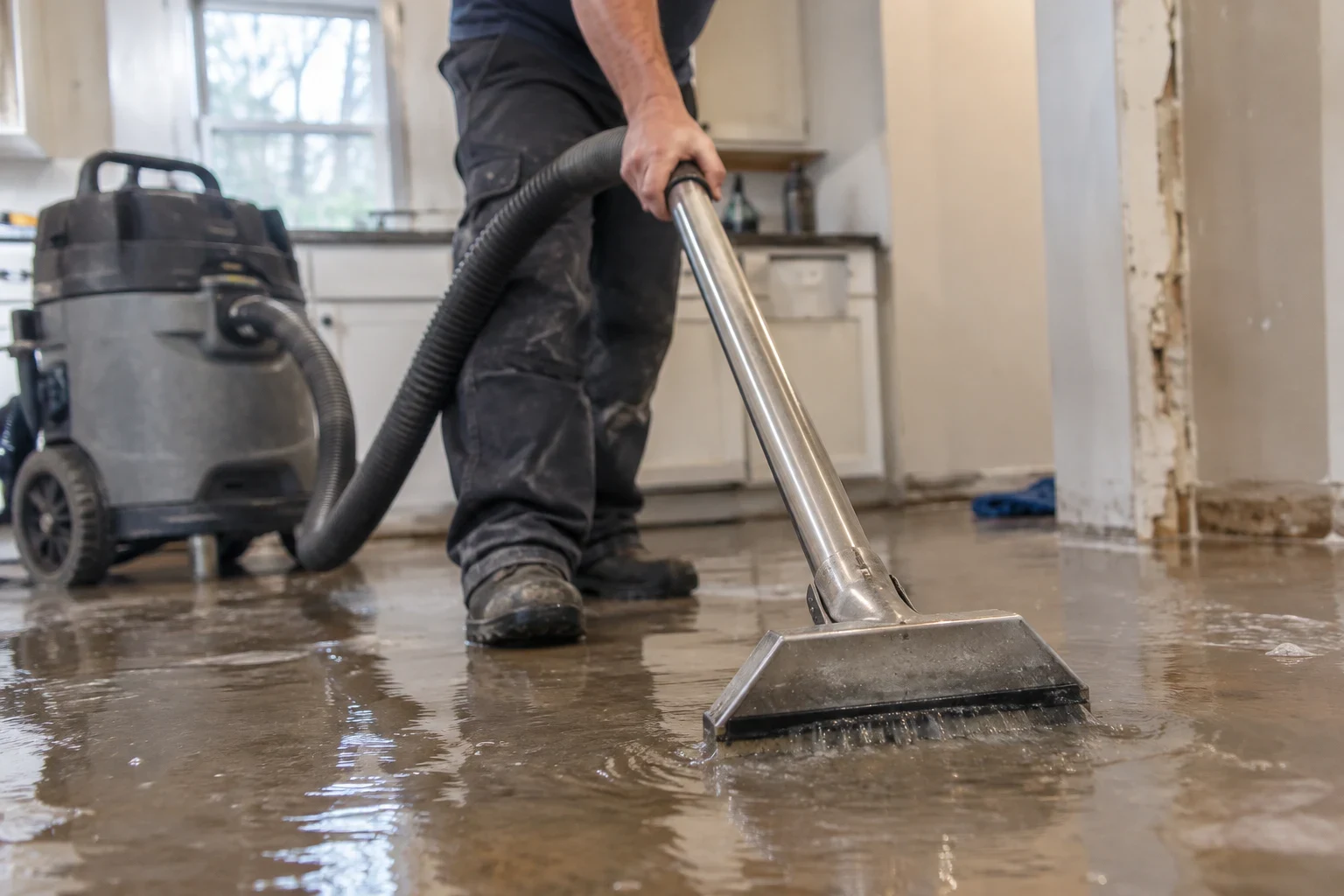
Water Extraction
Truck-mounted and portable extraction that pulls water out of carpet, pad, hardwood and subfloors before it wicks into walls and cabinets.
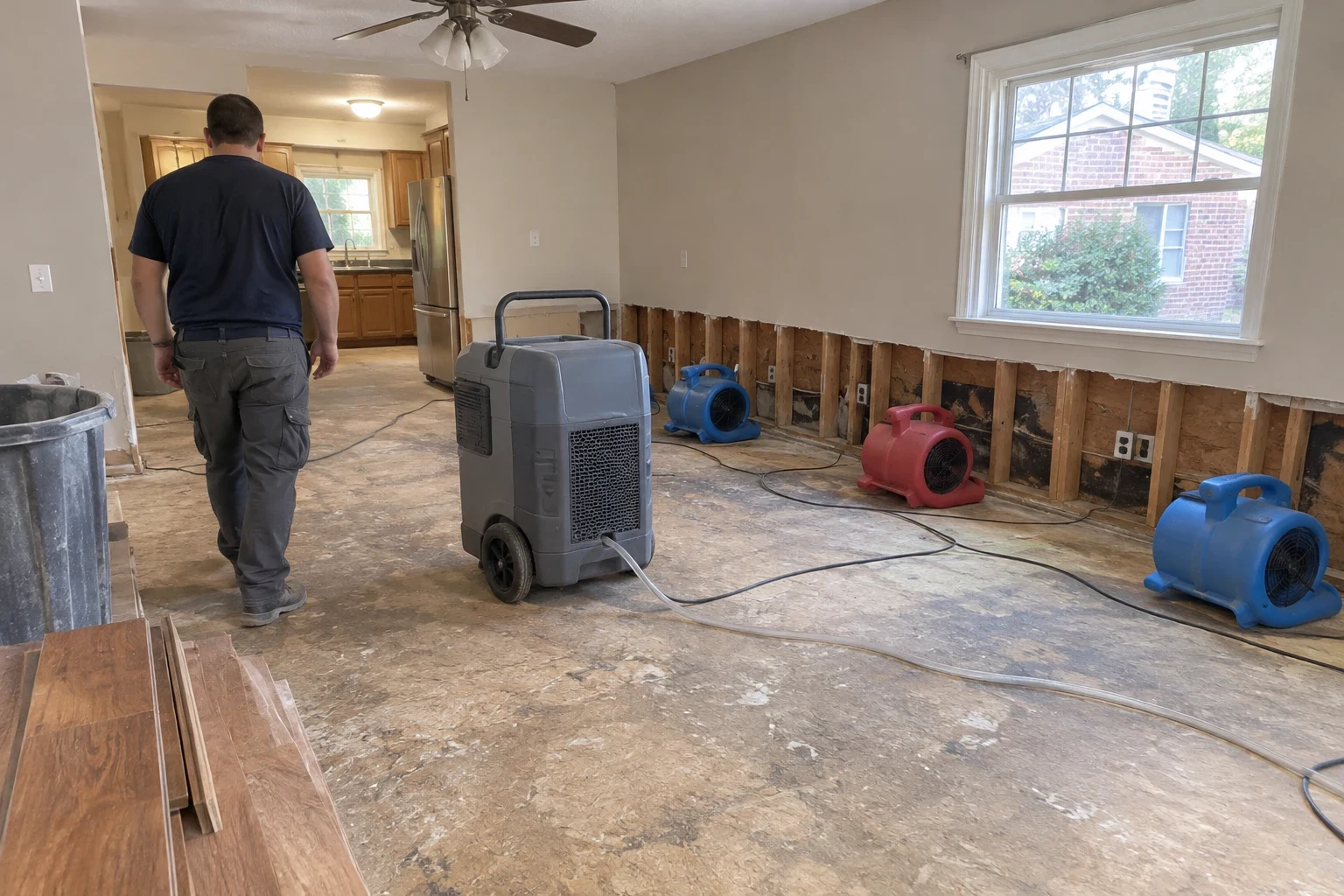
Drying and Dehumidifying
We pull hidden water out of walls, floors and framing, then log daily moisture readings so your home is truly dry before repairs begin.
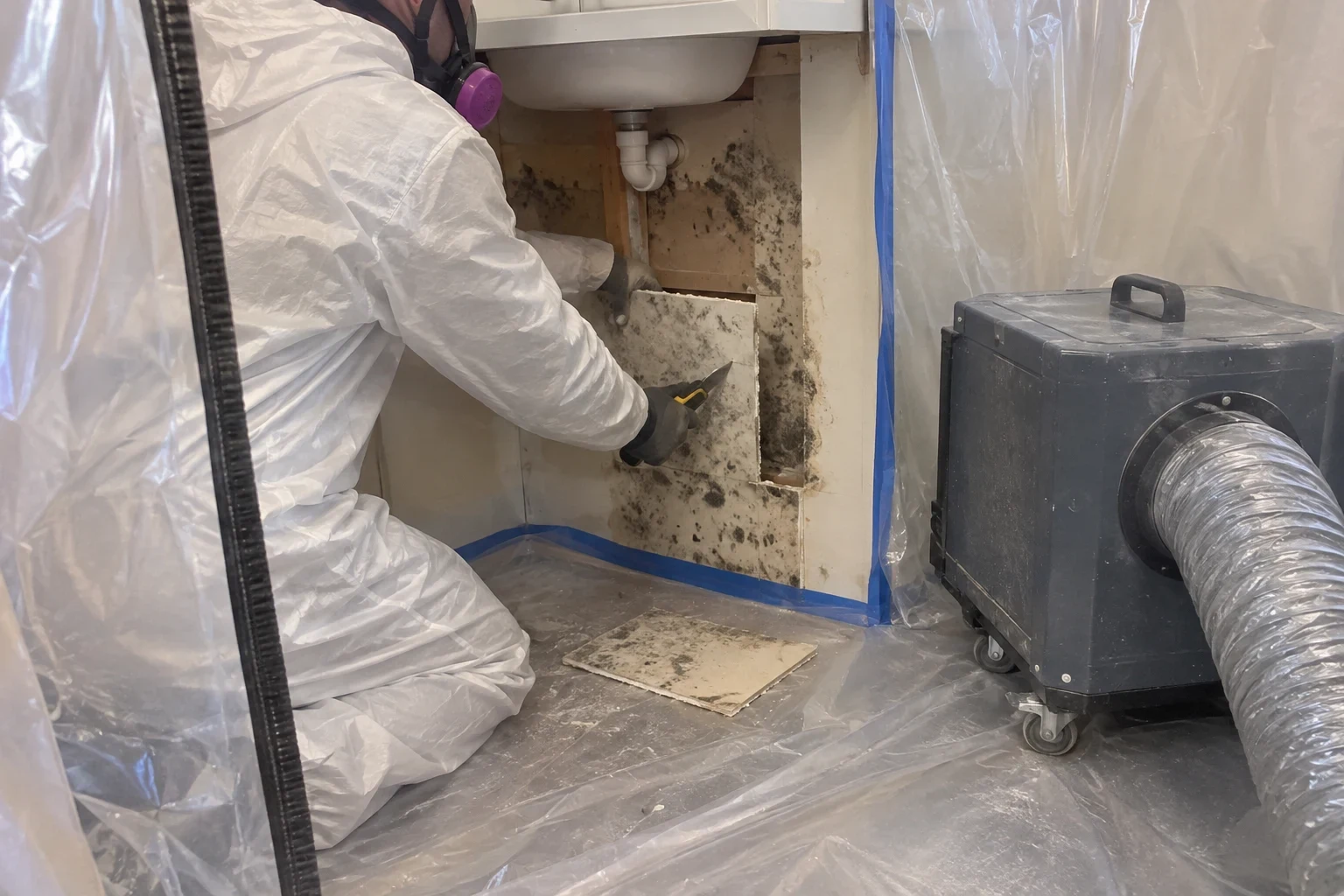
Mold Remediation
Contained mold removal that finds the moisture source, takes out what can't be saved, and leaves walls and framing ready for a clean, code-compliant rebuild.
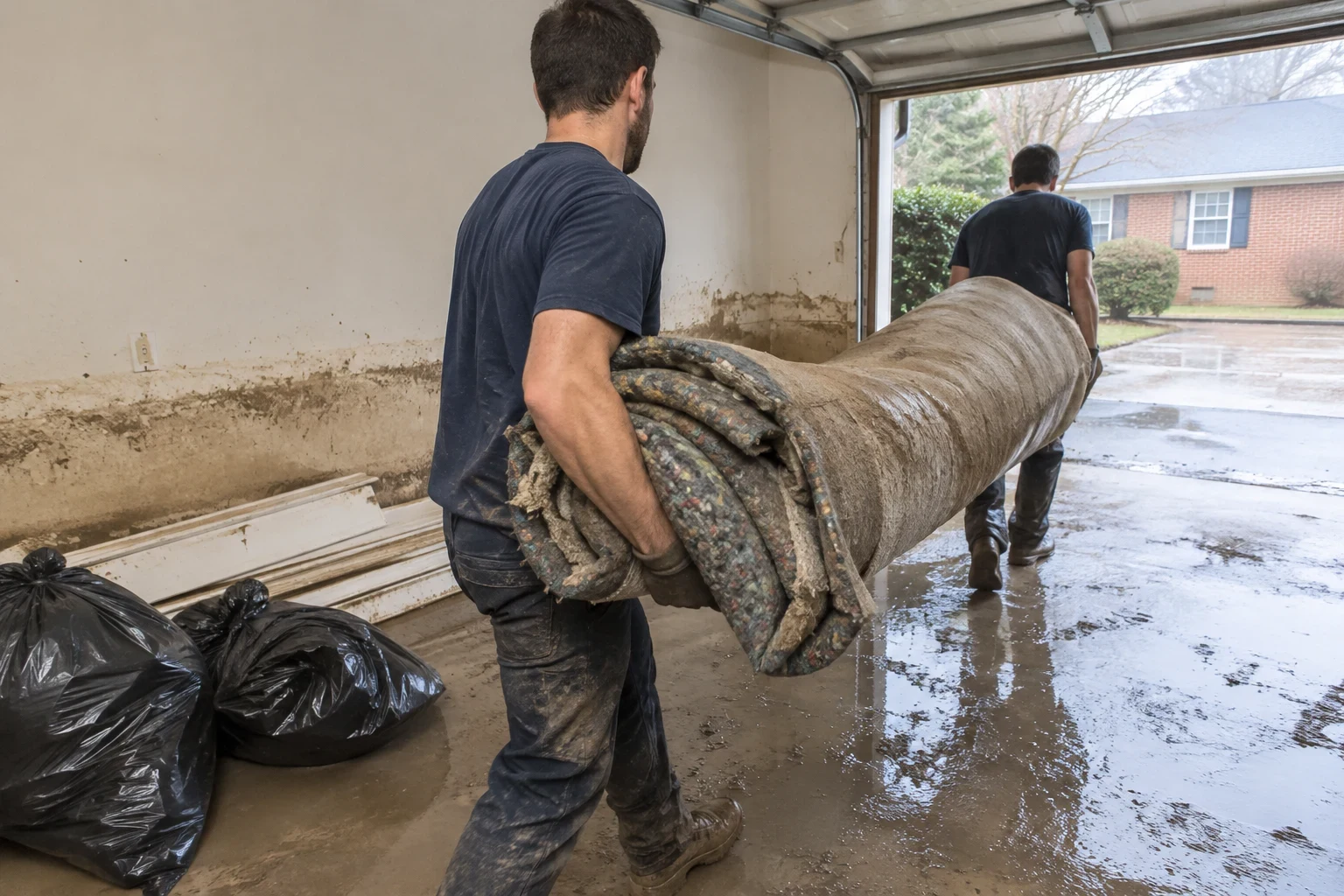
Flood Cleanup
Removal of floodwater, silt and soaked materials, then sanitizing and a measured dry-out so repairs can pass inspection.
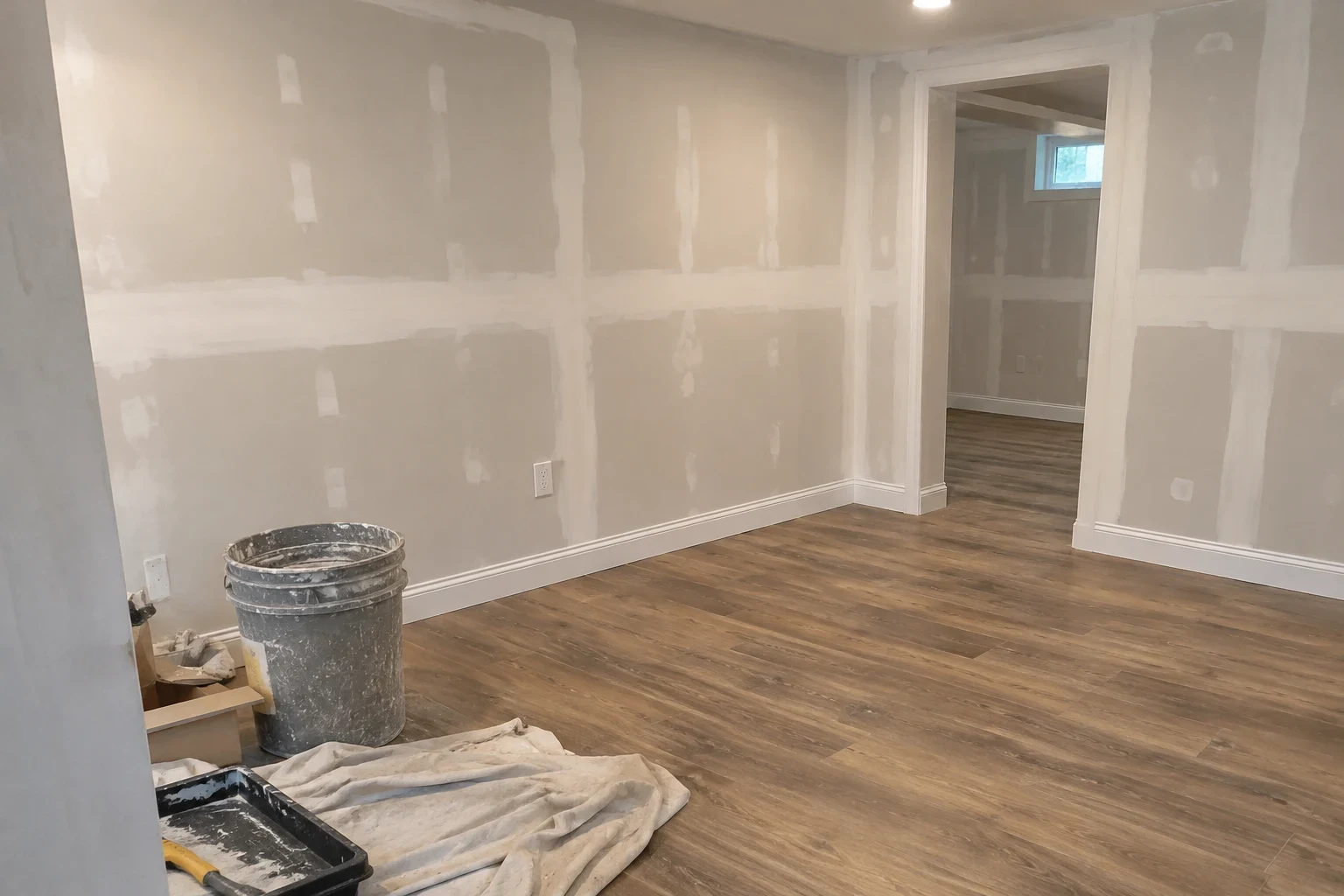
Repairs and Rebuild
Drywall, flooring, cabinets and trim rebuilt after water damage, with building office sign-offs handled where the work requires them.
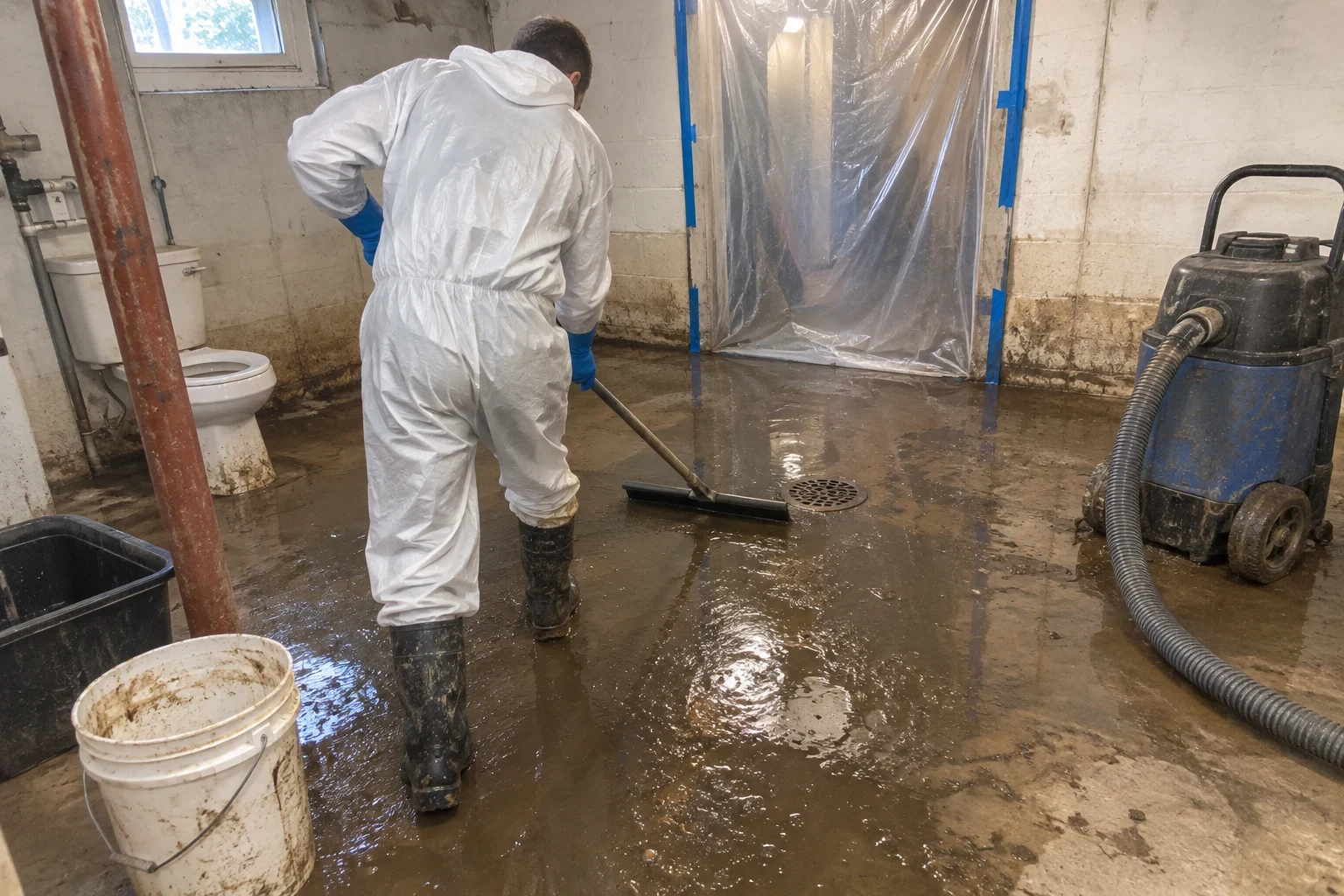
Sewage Cleanup
Safe removal of sewage backups, careful tear-out of contaminated materials, and disinfection before any rebuilding begins.
Areas We Serve
We are based around Fort Lee, VA, and work in homes throughout the surrounding area. That includes Petersburg, Hopewell, Colonial Heights and Ettrick, along with Chester, Enon, Bellwood, Meadowbrook and Bensley. Local building departments differ a little in their requirements, and we handle the paperwork for whichever one covers your address.
- Fort Lee
- Petersburg
- Hopewell
- Colonial Heights
- Ettrick
- Chester
- Enon
- Bellwood
- Meadowbrook
- Bensley
If you are close by but do not see your town listed, ask when you call and we will tell you whether we can reach you.
How a Restoration Job Runs
Here is what to expect from the first call to the final walkthrough.
- 1
Your call and the inspection
Tell us what happened and we arrange the visit. On site in 60 mins or less, we find the source, map the wet areas with meters and photograph everything.
- 2
Water out, damage stopped
We extract standing water, pull out materials that cannot be saved and set containment where needed. You get a clear picture of what stays and what goes.
- 3
Drying with daily readings
Air movers and dehumidifiers run while we check moisture levels each visit and log the results. Drying ends when the readings say it is done, not on a fixed calendar.
- 4
Repairs and sign-off
We rebuild with matched materials, handle any required filing with the building department and meet the inspector when the work calls for one. Finish work comes last, after anything behind the walls has been approved.
- 5
Final walkthrough
We walk the rooms with you, hand over the photos and moisture records, and make sure you are satisfied with the finish.
How We Work in Your Home
Restoration is partly cleanup and partly construction. We treat the construction half with the same care, because that is the part an inspector, a buyer or an insurer will look at later.
- 01
Code questions answered up front
Some repairs need a permit and some do not. Replacing a stretch of drywall usually does not, but moving wiring, rebuilding framing or replacing a water heater often does. We tell you which applies to your job, file the paperwork with the building department when it is required and schedule the inspection.
- 02
Dry means measured, not guessed
We take moisture readings in the framing, subfloor and drywall and write them down each visit. Walls are not closed up until the numbers say the materials are dry, which is how mold gets prevented rather than sealed in.
- 03
Materials matched to the room
A bathroom or basement wall gets moisture-resistant board, and replaced insulation goes back at the rating the space calls for. Trim, flooring and paint are matched as closely as the existing finish allows, and we show you samples first.
- 04
Your home protected while we work
We lay floor protection along our paths, set up containment where dust or spores are involved and clean up at the end of every day. Equipment noise is part of drying, so we explain what will run and for how long.
- 05
Insurance handled in plain terms
We work with most major insurance companies. We document the damage with photos and readings and explain how a claim usually moves, while the decisions stay between you and your adjuster.
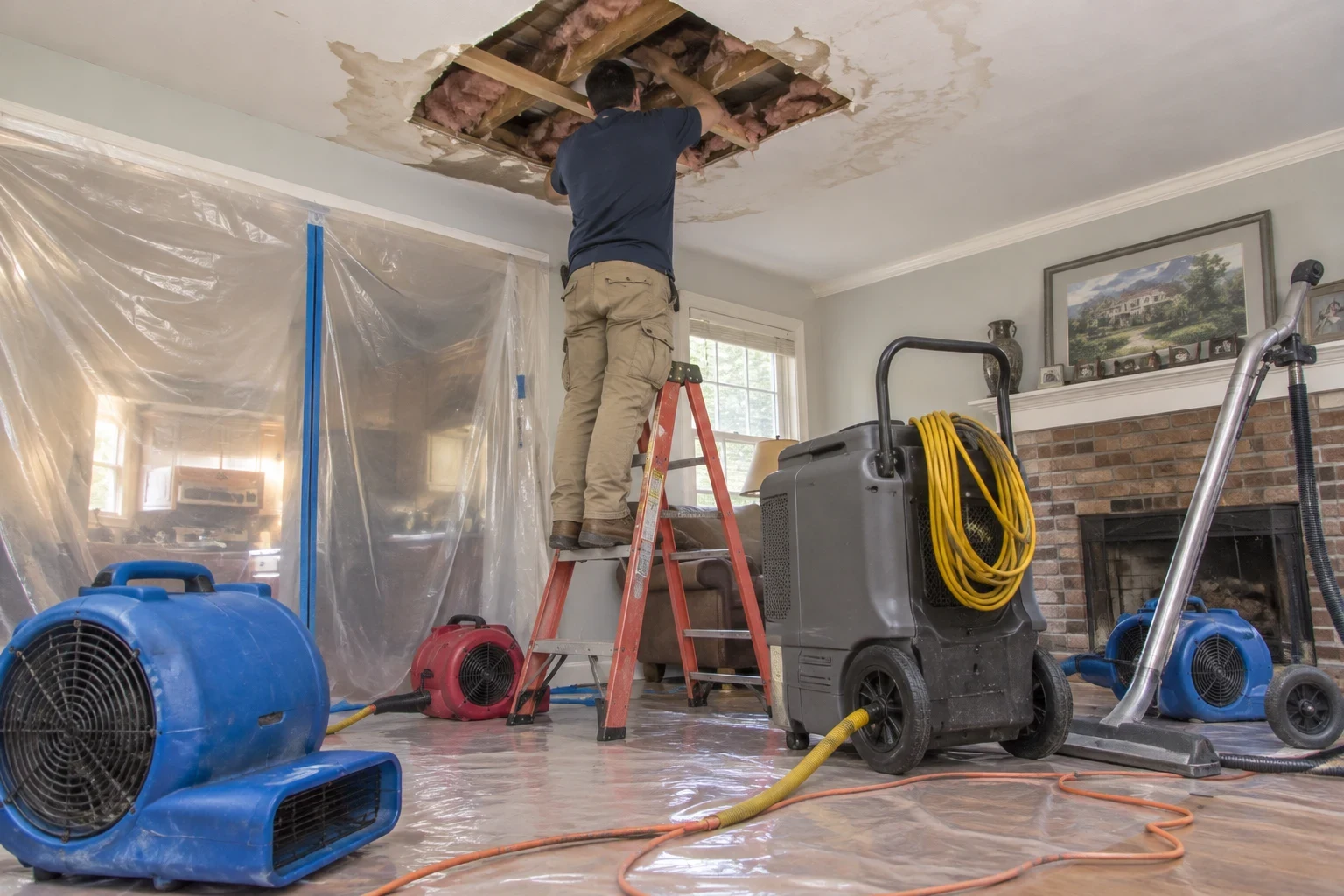
About Water Damage Restoration Fort Lee
We are a local restoration company that does both halves of the job: getting the water out and putting your home back together. Keeping those under one roof means the person who dried your walls knows exactly what went into them before they are closed.
Our approach is quiet and methodical. We explain what we find, show you the readings and photos, and talk through code requirements and inspections in plain language. Much of what makes a repair last happens where nobody will see it once the paint is dry, so that is where we spend our care.
Questions Homeowners Ask Us
How fast can you get to my home?
For water damage we aim to be on site in 60 mins or less. Emergency water damage response matters because water spreads into walls and subfloors quickly. The sooner extraction starts, the more of your home can usually be dried rather than replaced.
Is the inspection really free?
Yes. We come out, find the source, take moisture readings and photograph the damage at no charge. You then get a written estimate, and you decide whether to move forward.
Will my insurance cover this?
That depends on your policy and on what caused the water, so the final answer comes from your insurer. We work with most major insurance companies and provide the photos, readings and line-item scope an adjuster typically asks for. We can explain the usual steps of a claim, but we do not act as your adjuster.
Do repairs after water damage need a permit?
Some do. Cosmetic work like replacing drywall and paint usually does not, while electrical, structural or plumbing changes often do. We tell you up front which work on your job needs one, handle the filing ourselves and arrange the inspection.
How long does drying take?
Many rooms dry in a few days, but dense materials, hardwood floors and crawl spaces can take longer. We measure moisture each visit and stop only when the materials reach dry readings. Closing walls early is how hidden mold starts.
Can I stay in my home during the work?
Usually, yes, for clean-water jobs. Drying equipment is noisy and we may need to close off a room or two. With sewage or significant mold we may recommend staying out of the affected area until it has been cleaned and cleared.
Do I have to replace everything that got wet?
No. Many materials can be dried in place, especially when water is caught early. We tell you honestly what can be saved and what cannot, and we show you the readings behind that call.
What Shapes the Cost of a Restoration
No two water losses are priced the same, and we would rather explain why than hand you a number that changes later. These are the things that move the total. Every one of them is visible on the inspection, and we walk you through what we see.
After the free inspection we give you a written estimate with each line item spelled out. If we find something new once walls are open, we show you photos and explain it before any added work begins.
- The kind of water
- Clean water from a supply line is handled differently than gray water from a washer or sewage from a drain backup. Contaminated water means more removal of porous materials, more protective gear and more cleaning steps.
- How long it sat
- Water caught within hours often stays in the carpet and the bottom of the drywall. After a day or two it wicks up walls, swells subfloors and can start mold growth, which adds work.
- What got wet
- Hardwood, laminate, carpet pad, plaster and drywall each react to water in their own way. Some can be dried in place and some cannot be saved, and that choice shapes the cost more than square footage does.
- Access and hidden spaces
- Water under cabinets, inside wall cavities or in a crawl space takes more time to reach and dry. In humid summers a crawl space can also hold moisture long after the visible water is gone.
- Code updates and inspections
- When repairs touch wiring, framing or plumbing, the local building department may need to review and sign off on the work. Sometimes the code also asks for an update, such as outlets near water being brought up to current protection.
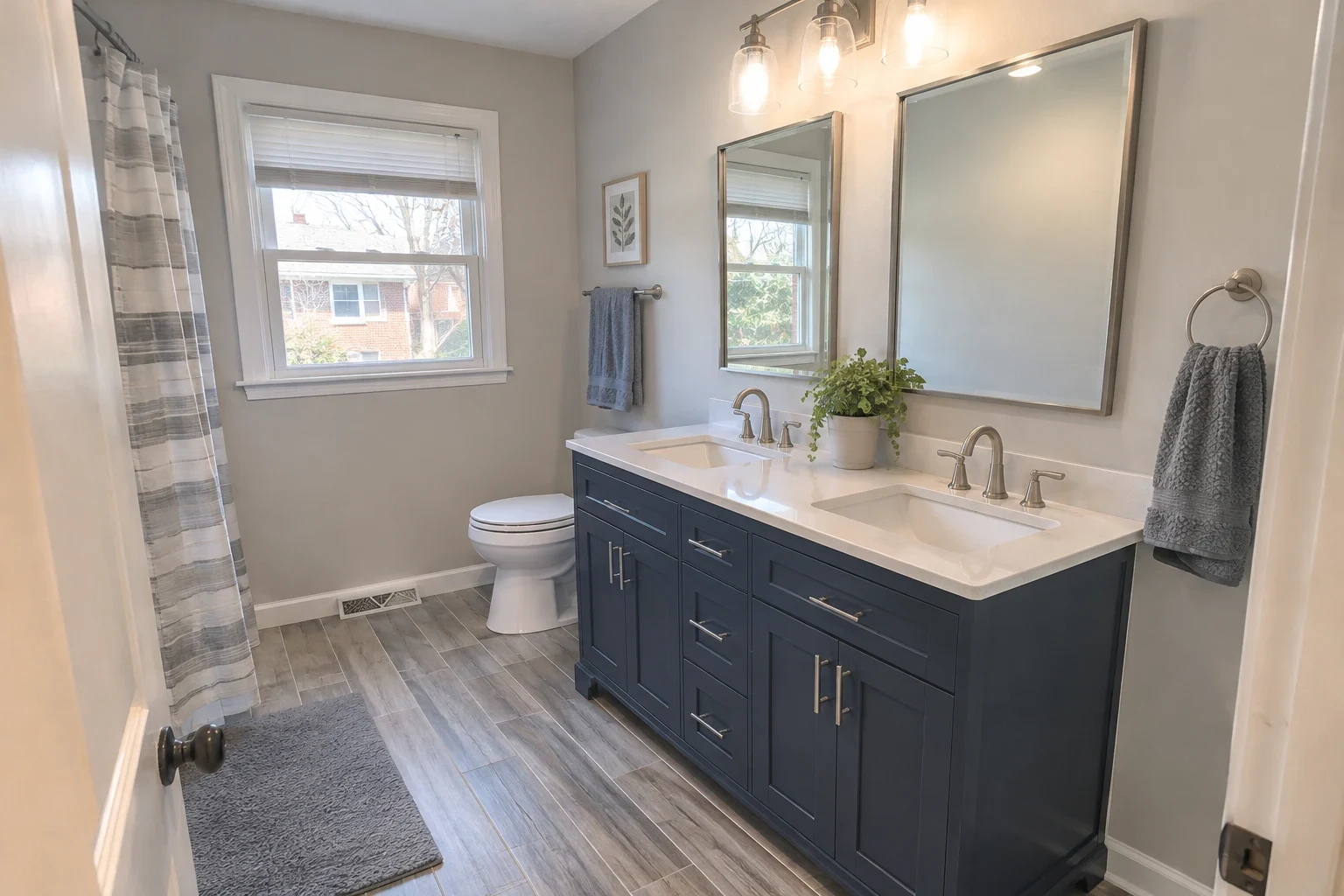
Find Out What the Water Has Reached
A free on-site inspection shows you where the moisture is, what can be saved and whether any repair will need an inspector's sign-off. We explain it all before any work begins.