ServicesMold Remediation
Mold Remediation in Fort Lee
We find where the moisture is coming from, seal off the affected area, and remove mold without spreading spores through the rest of your home. You get a clear written scope first, and any rebuild afterward is done to current code.
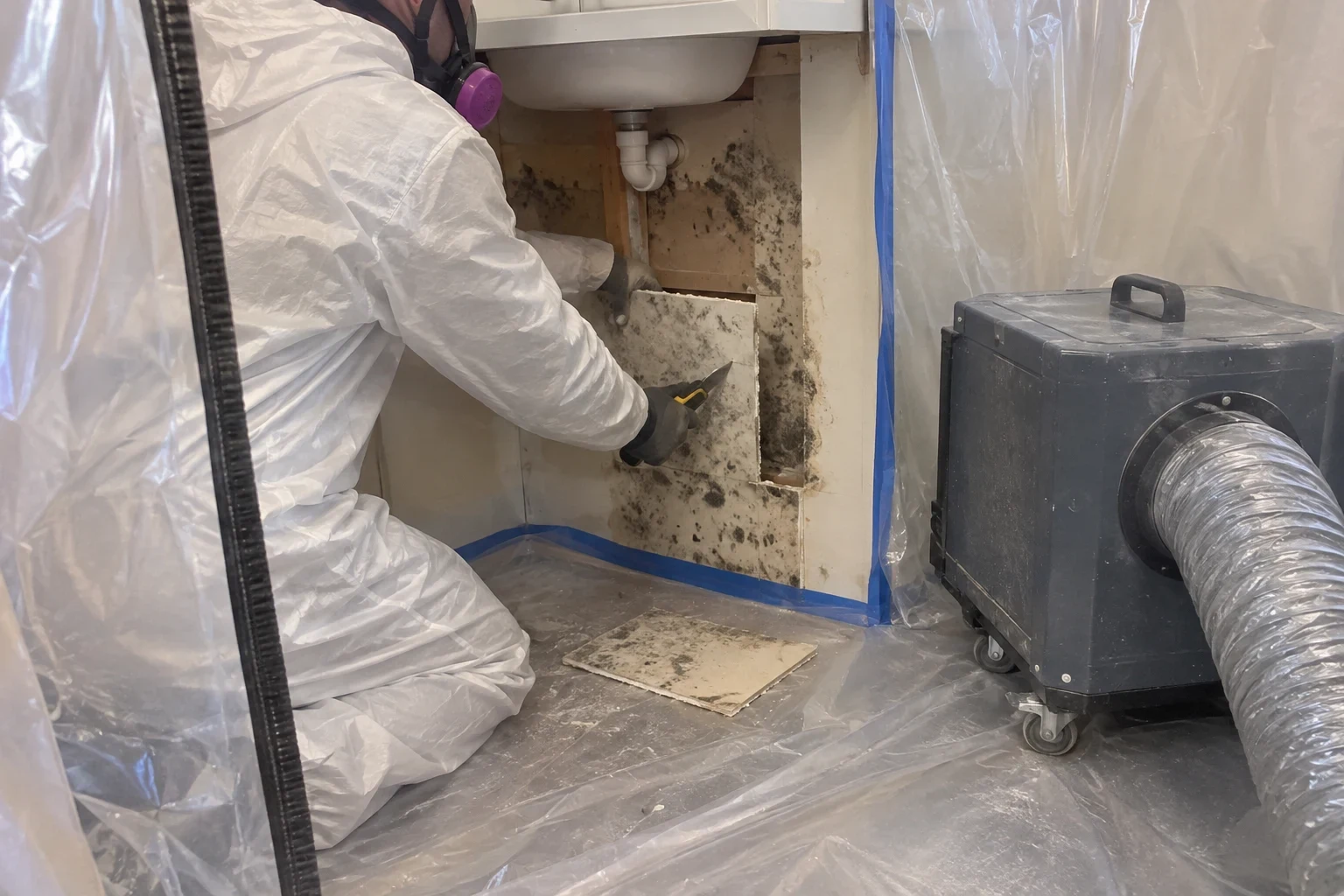
Removing mold, and the reason it grew
Mold needs three things: a surface it can feed on, warmth, and moisture that stays put for a day or two. Drywall paper, wood framing, carpet pad and ceiling tile all qualify. Scrubbing what you can see rarely solves it, because the growth on the back of a wall is usually larger than the stain on the front.
Our approach is to treat mold as a moisture problem first. We trace the source, whether that is a slow supply-line leak, a sweating duct or a damp crawl space through a humid Virginia summer, and we fix or flag it before cleaning begins. Then we contain the area, remove damaged material, clean what can stay, and dry the structure to normal levels.
When walls or ceilings come out, putting them back is construction work. We explain plainly which repairs need a permit and inspection from the local building department, and we handle that step so the finished work is safe and documented.
What the work includes
Moisture mapping
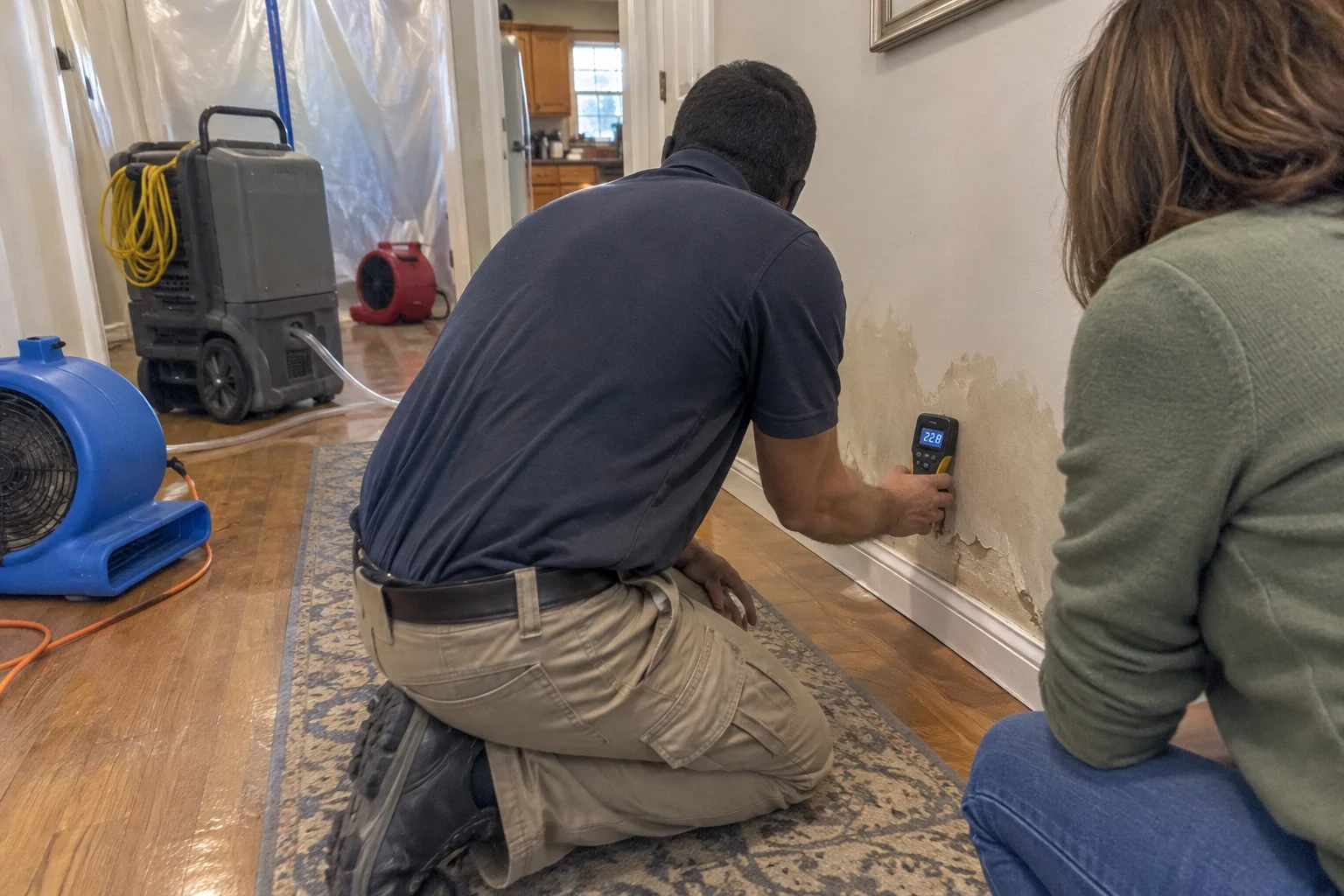
We check walls, subfloors and framing with moisture meters and thermal imaging to find wet areas you cannot see. This tells us how far the damage really goes, so the scope is neither too small nor padded.
Sealed containment
Plastic sheeting, zipper doors and negative air pressure keep spores inside the work area. Your HVAC returns in that space are covered so the system doesn't carry spores to other rooms.
HEPA air filtration
Air scrubbers with HEPA filters run throughout the job and capture airborne spores as material is disturbed.
Removal of porous materials
Moldy drywall, insulation, carpet pad and ceiling tile are cut out past the visible edge, bagged inside containment and carried out sealed. Porous materials with active growth generally cannot be cleaned reliably, so we don't pretend otherwise.
Cleaning and treating framing
Studs, joists and sheathing that are structurally sound are HEPA-vacuumed, wiped with an antimicrobial cleaner and, where needed, sanded. We dry them fully before anything is closed back up.
Photo documentation
We photograph what we find, what we remove and the condition of the cavity before rebuild. Those records help with your insurance claim and with any future sale of the house.
Signs it is time to call about mold
- A musty smell that returns
- An earthy odor that comes back after cleaning, especially when the air conditioning cycles on, often points to growth inside a wall, under flooring or in ductwork.
- Spots or staining on drywall
- Gray, green or black speckling, or a yellow-brown ring on a ceiling, usually means water has been sitting behind the surface for some time.
- Warped trim or soft flooring
- Baseboards pulling away, cupped hardwood or a subfloor that gives underfoot are signs of lingering moisture that mold will follow.
- A leak that wasn't dried properly
- If a pipe burst, a toilet overflowed or a storm pushed water in and the area was only towel-dried, mold can start within 24 to 48 hours. That is often where our drying and dehumidifying work comes in first.
- Condensation in the crawl space
- Damp insulation hanging from floor joists or white fuzz on wood below the house tells us humidity is not being controlled.
How a mold remediation job runs
- 1
Free on-site inspection
We walk the affected area with you, measure moisture, find the source and take photos. You get a written, line-item scope that separates mold work from any repairs, so nothing is hidden inside a single number.
- 2
Containment and setup
We lay floor protection along the path in and out, build containment, start negative air and cover vents. Rooms outside the work area stay usable for most jobs.
- 3
Removal and cleaning
Damaged material comes out in sealed bags, framing is cleaned and treated, and the space is HEPA-vacuumed top to bottom. Air scrubbers keep running the whole time.
- 4
Drying and verification
We dry framing to normal moisture readings and confirm with meters before anything is closed in. If you want independent clearance testing, we will coordinate with a third-party tester of your choosing.
- 5
Rebuild to code
Our repairs and rebuild work replaces insulation, drywall and finishes. When the job touches structure, plumbing or electrical, we pull the permit and schedule the inspection, and we walk you through what the inspector is checking.
What affects the cost of mold remediation
Every job is priced after we see it, because the visible patch rarely tells the whole story. Your written estimate lists each part of the work separately. If we open a wall and find more than expected, we show you photos and talk it through before going further.
- Size and spread
- The square footage of affected material and whether growth has moved into neighboring wall cavities or ceiling spaces sets the scale of containment and removal.
- Materials involved
- Drywall and carpet pad come out quickly. Hardwood, cabinetry, plaster and finished trim take more care to remove or protect, and more effort to match on the rebuild.
- Access
- Low crawl spaces, attics and finished basements take longer to contain and work in than an open room.
- The moisture source
- A leak that still needs a plumber, or a crawl space that needs a vapor barrier, adds to the scope. Skipping that step usually means paying for remediation twice.
- Permits and rebuild
- Repairs that require a permit and inspection add time and a fee. We list these separately so you can see exactly what you are paying for.
Mold remediation questions
- Can I just clean the mold with bleach?
- On a hard, sealed surface like tile, a small spot can often be cleaned. On drywall or wood, bleach mostly lightens the stain while the roots stay in the material, and the added water can feed new growth. If the patch is larger than a few square feet, or keeps coming back, it is worth having us look.
- Is it safe to stay in the house during the work?
- In most cases, yes. Containment and negative air keep spores inside the work area, and the rest of your home stays in normal use. If anyone in the household has asthma, a weakened immune system or a strong mold sensitivity, tell us during the inspection and we will plan the work around it.
- Will my homeowners insurance cover mold remediation?
- It depends on the cause. Mold that follows a sudden covered event, such as a burst pipe, is often included, while mold from long-term leaks or humidity frequently is not. We work with most major insurance companies and can provide photos and moisture readings for your claim, but your adjuster makes the coverage decision.
- Do mold repairs need a permit?
- Removing and cleaning moldy material generally does not. Rebuilding can, especially when framing, plumbing, wiring or a structural element is replaced. We tell you up front which parts of your job need a permit, pull it, and have the work inspected before the walls are finished.
- How do I keep the mold from coming back?
- Control the moisture. That means fixing the leak, keeping indoor humidity reasonable in summer and making sure crawl spaces and bathrooms vent properly. Before we leave, we point out anything we saw that could let water back in.
- How quickly can you get here?
- If mold is tied to an active leak or fresh water damage, we offer emergency response and are on site in 60 mins or less. For older mold with no active water, we schedule the free inspection at a time that suits you.
Find out what is behind the wall
A free on-site inspection shows you where the moisture is, how far the mold has spread and what it takes to fix it properly. We serve Fort Lee, Petersburg, Hopewell, Colonial Heights and the surrounding area.