ServicesFlood Cleanup
Flood Cleanup in Fort Lee
When floodwater gets into your home, we pump it out, remove what cannot be saved, and clean and sanitize every surface it touched. Then we dry the structure to verified readings. Each step is photographed and logged, so your insurer and any inspector can see what was done.
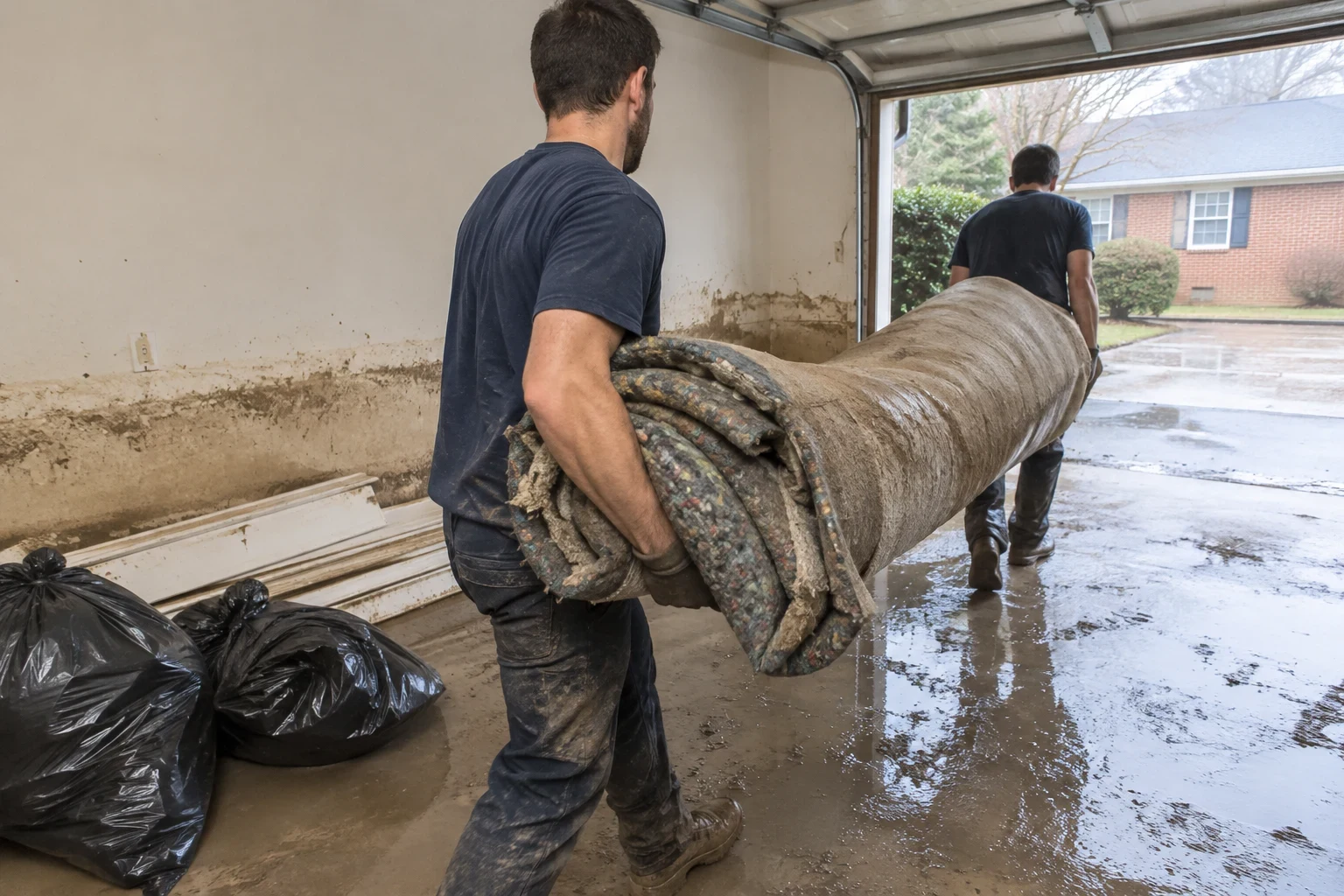
What flood cleanup covers, and when you need it
Flood cleanup is the work that follows water coming in from outside: a storm surge through a basement door, a river or creek over its banks, or heavy rain backing up through the foundation. That water is never clean. It carries soil, fertilizer, fuel and sewage, so the industry treats it as contaminated from the first minute.
That changes the job. A burst supply line can often be dried in place. Floodwater usually means cutting out wet drywall, pulling soaked insulation and carpet pad, and disinfecting framing before anything is dried or closed up. We do this carefully, saving what can honestly be saved and documenting what cannot.
Our aim is a house that is ready for repairs that meet the Virginia building code. That means clean, dry framing, safe electrical, and moisture readings that support closing the walls back up.
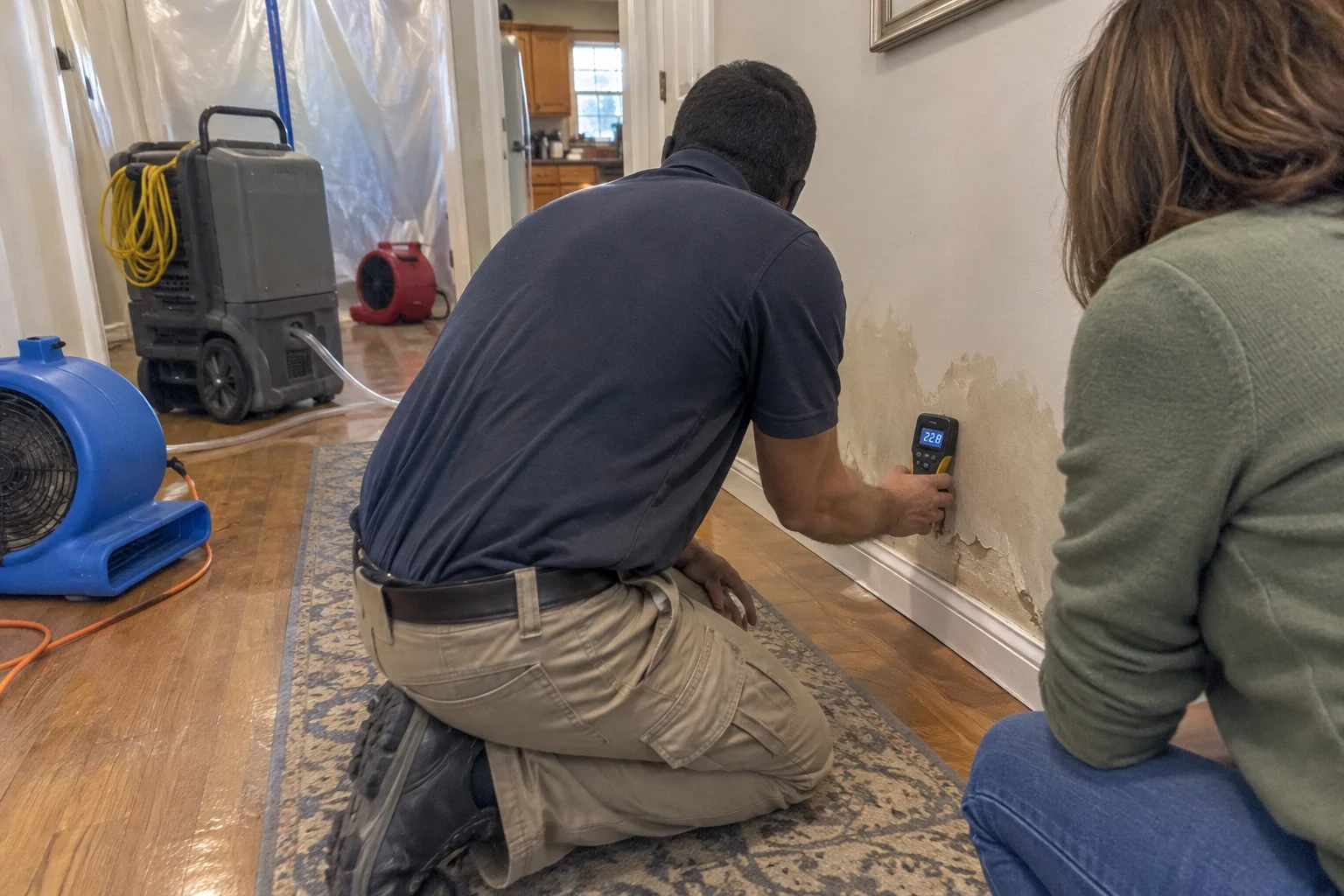
What the work includes
- 01
Water and silt removal
Truck-mounted and portable pumps take out standing water. We then shovel and squeegee the mud and silt that floods leave behind, which holds bacteria and keeps materials wet.
- 02
Flood cuts
We cut drywall a set distance above the highest water line, usually in a straight line that makes patching clean later. Wet insulation behind it comes out too, because it will not dry and can hold contamination.
- 03
Removal of unsalvageable materials
Carpet and pad, particleboard cabinets and laminate flooring rarely survive floodwater. We photograph and list each item before it leaves your home, which your adjuster will need.
- 04
Cleaning and sanitizing
Exposed studs, subfloors, slab and crawl space surfaces are washed and treated with an antimicrobial. This is the step that keeps a flood from turning into a mold problem.
- 05
Structural drying
Air movers and dehumidifiers run until framing and subfloor reach dry standard. Our drying and dehumidifying page explains how we measure it.
Questions about Flood Cleanup?
Call(804) 696-4257Signs your home needs flood cleanup
Water came in from outside
Any water that crossed the ground before entering your home counts as floodwater, even if it was only a few inches deep and drained quickly.
A visible line on the walls
A tide mark or swollen baseboard shows how high the water reached. The wicking inside the wall is usually higher than what you see.
Mud or debris left behind
Silt on floors or in the crawl space means contaminants came in with the water and need to be removed, not just dried.
Musty smell after a storm
An earthy or sour odor a day or two after heavy rain often means wet insulation or a damp crawl space that is starting to grow mold.
Water near outlets or equipment
If water reached receptacles, the panel, the furnace or the water heater, those systems need checking before power or gas is restored.
How a flood cleanup job runs
- 1
Safety check and inspection
We confirm power is off to wet areas and look for structural or gas concerns before anyone works inside. Then we map the water line, take moisture readings and photograph every room.
- 2
Extraction and mud-out
Standing water is pumped out and silt is removed. Belongings that can be saved are moved to a dry area or listed for pack-out.
- 3
Tear-out and sanitizing
We make the flood cuts, pull wet insulation and flooring, and treat every exposed surface. You get a written list of what came out and why.
- 4
Dry-out with daily readings
Drying equipment runs while we log moisture at the same points each visit. Walls stay open until the numbers say the framing is dry.
- 5
Ready for repairs and inspection
We hand over the moisture log and photos. If an electrician or a building permit is needed before rebuilding, we explain which and why, and our repairs and rebuild crew can take it from there.
What affects the cost of flood cleanup
No two floods leave the same mess, so we price from what we find on site and put it in a written, line-item estimate. Much of the cost is often covered by flood insurance, and we can walk you through what your adjuster will ask for.
- Depth and spread of the water
- A few inches across one room is a smaller job than a full basement or a soaked crawl space. Height on the wall sets how much drywall and insulation must come out.
- How long the water sat
- Water that stood for days soaks deeper into framing and subfloor, which adds tear-out, sanitizing and drying time.
- Materials involved
- Plaster, hardwood, built-in cabinetry and finished basements take more care to remove or save than open framing and a bare slab.
- Access and debris volume
- Tight crawl spaces, stairs and heavy silt loads add labor and haul-away costs.
Flood cleanup questions
Does my homeowners policy cover flood damage?
Standard homeowners policies usually exclude surface flooding. Coverage typically comes from a separate flood policy, often through the National Flood Insurance Program. We work with most major insurance companies and will give your adjuster the photos, moisture readings and item lists they need, but the coverage decision is theirs.
How soon can you get here?
Flooding is an emergency for most families, and we treat it that way. We are on site in 60 mins or less, so cleanup and drying can start before contamination spreads further into the walls.
How high do you cut the drywall?
We measure how far moisture has wicked above the visible water line, then cut above that point, often at two or four feet so standard sheets patch cleanly. Cutting too low leaves wet material hidden in the wall.
Do I need a permit for flood cleanup?
The cleanup and tear-out itself generally does not. Rebuilding often does, especially electrical work and structural repairs, and some homes need an electrician to inspect flooded circuits before power is restored. We tell you which steps call for a permit or inspection so nothing surprises you later.
Can I clean it up myself?
You can move belongings and photograph the damage, which helps your claim. Floodwater carries bacteria and sewage, though, and drying open framing to a verified standard takes equipment and meters. If walls are closed while still wet, mold remediation often follows.

Get the water out and the house ready for repairs
We will inspect the damage, explain what has to come out and what can stay, and start the cleanup on your schedule or right away.