ServicesDrying and Dehumidifying
Drying and Dehumidifying in Fort Lee
Carpet can feel dry while the drywall, subfloor and framing behind it are still wet. We set up drying equipment where it actually reaches that water, check readings every day and record the result, so your home is ready to be closed up and finished.
Why drying is its own job
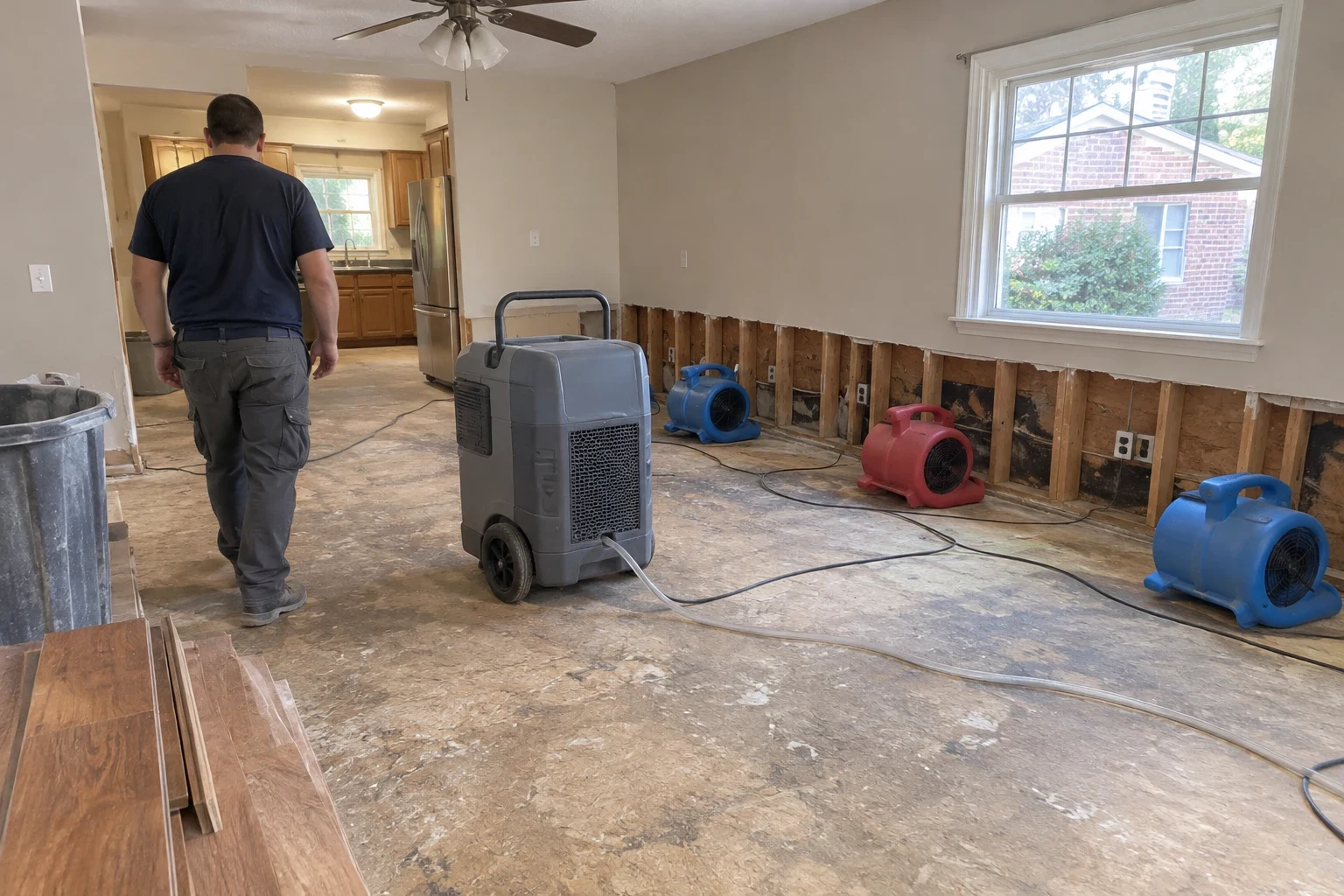
Once the standing water is gone, the slower part begins. Drywall, subfloor, framing and insulation hold water long after the surface looks fine, and that hidden moisture is what cups hardwood, swells cabinet bases and feeds mold within days. Drying and dehumidifying removes water from the structure itself, at a controlled pace, so materials shrink back without cracking or warping.
We treat drying as measured work. On the first visit we take readings on wet materials and on unaffected materials in the same room, which gives us a dry standard to work toward. Equipment stays in place until every reading meets it. That record matters later, because it shows your repair contractor, your insurance adjuster and any building inspector that the framing was dry before new drywall went up.
If water is still standing, we start with water extraction and move straight into drying the same visit.
What the work includes
- Moisture mapping
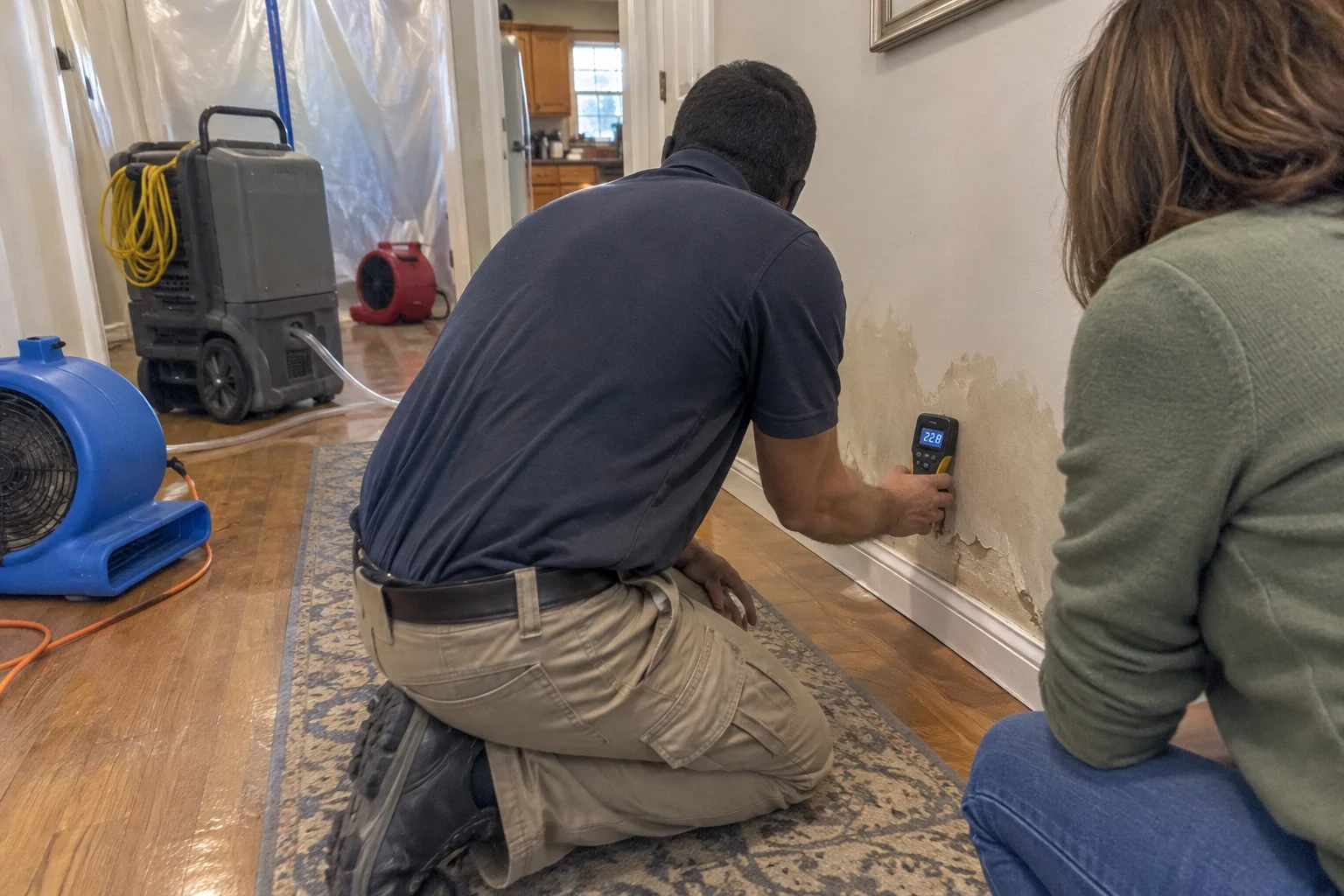
- We use pin and pinless meters along with thermal imaging to find where water has wicked up walls or spread under flooring. Each wet area is marked on a simple sketch of the room so nothing is missed.
- Equipment sized to the space
- Air movers and low-grain refrigerant dehumidifiers are placed based on room volume and how much wet surface there is. Too little equipment drags the job out, and too much wastes power without drying faster.
- Opening up only what needs it
- Sometimes air has to reach the framing. That can mean pulling baseboards, drilling small holes behind cabinet toe kicks or cutting drywall just above the wet line. Wet fiberglass insulation comes out, because it rarely dries properly inside a closed wall.
- Crawl spaces and subfloors
- Many homes around Fort Lee sit over crawl spaces, where damp air lingers under the floor. We dry the joists and subfloor from below when the water has reached them.
- Daily readings and photos
- Every visit we record moisture levels, indoor humidity and temperature, and adjust equipment where an area is lagging. You get a copy of that log when the job is done.
Signs your home still needs drying
A musty smell days later
An odor that shows up after the cleanup usually means moisture is trapped in a wall cavity or under the floor.
Hardwood starting to cup
Boards that rise at the edges are absorbing water from below. Drying them early often saves the floor from replacement.
Soft or stained drywall near the floor
Bubbling paint, a tide line or drywall that gives under a thumb means water has wicked upward into the wall.
Swollen cabinet bases
Particleboard toe kicks and cabinet floors soak up water quickly after a dishwasher or sink leak and need air behind them.
Damp, heavy air indoors
Fogged windows, sticky floors or a dehumidifier that fills in hours point to more water in the structure than a household unit can handle.
What affects the cost of drying
Drying is billed mostly by the equipment used and the days it runs, along with any material that has to come out. We explain each line before work starts so the total makes sense. We work with most major insurance companies, and we can share our readings and photos directly with your adjuster.
How much got wet
One soaked bathroom floor needs far less equipment than water that spread through several rooms and into the walls.
How quickly drying starts
Water that sits for a day or two moves deeper into framing and subfloor, which adds equipment days.
What has to be removed
Wet insulation, padding or swollen trim adds labor and disposal, and later shows up on the repairs and rebuild side.
Access and materials
Crawl spaces, finished basements and dense materials like hardwood or plaster dry more slowly and take more careful setup.
How a drying job runs
- 1
Inspection and baseline readings
We walk the affected rooms with you, take readings and explain what is wet, how far it has traveled and what we suggest. Nothing starts until you agree to the plan.
- 2
Protect and prepare
We cover nearby flooring, move furniture onto blocks and shut off power to any outlet that got wet. Any removal of baseboards or drywall is kept to the wet area.
- 3
Set the equipment
Air movers go along the wet walls and dehumidifiers go where they can pull moisture from the whole space. We run cords so walkways stay clear and circuits are not overloaded.
- 4
Check and adjust every day
We return daily to read meters, empty or reposition equipment and note progress. Slow spots get more airflow or a targeted approach.
- 5
Confirm dry and hand off
When every reading meets the dry standard, we remove the equipment and give you the moisture log. That document goes to your adjuster and supports any repair permit or inspection that follows.
Drying and dehumidifying questions
How long does drying usually take?
Most rooms reach the dry standard in roughly three to five days. Hardwood, plaster and crawl spaces can take longer. We base the finish date on readings, not on a calendar, and we tell you each day where things stand.
Can I just use box fans and a household dehumidifier?
For a small surface spill, often yes. Once water has soaked into drywall, padding or framing, household equipment usually cannot move enough moisture fast enough to stay ahead of mold. A quick reading tells you which situation you are in.
Can we stay in the house while equipment runs?
Usually, yes. The equipment hums steadily and warms the room, so many people close the door to the affected area. We keep cords tidy and walkways open, and we show you which units can be switched off and which should stay on.
Does drying need a permit?
Drying itself generally does not. Replacing drywall, rewiring wet circuits or repairing framing can require a permit and inspection through the local building department. Our moisture log shows the materials were dry before they were covered, which is exactly what an inspector or adjuster wants to see.
Will my hardwood floors need to be replaced?
Not always. Floors that are dried early with specialized mats often flatten back enough to be sanded and refinished. If the boards have buckled or the subfloor stays wet too long, we will tell you plainly that replacement is the better answer.
Dry it right before it gets closed in
Our team is on site in 60 mins or less, and emergency water damage response is available around the clock. We will take readings, explain what we find and lay out a drying plan for your home.