ServicesWater Extraction
Water Extraction in Fort Lee
When water is standing in your home, every hour lets it wick further into drywall, pad and subfloor. We remove it with commercial extraction equipment, measure what stays wet behind the surfaces, and leave you with a clear written plan for drying and any repairs.
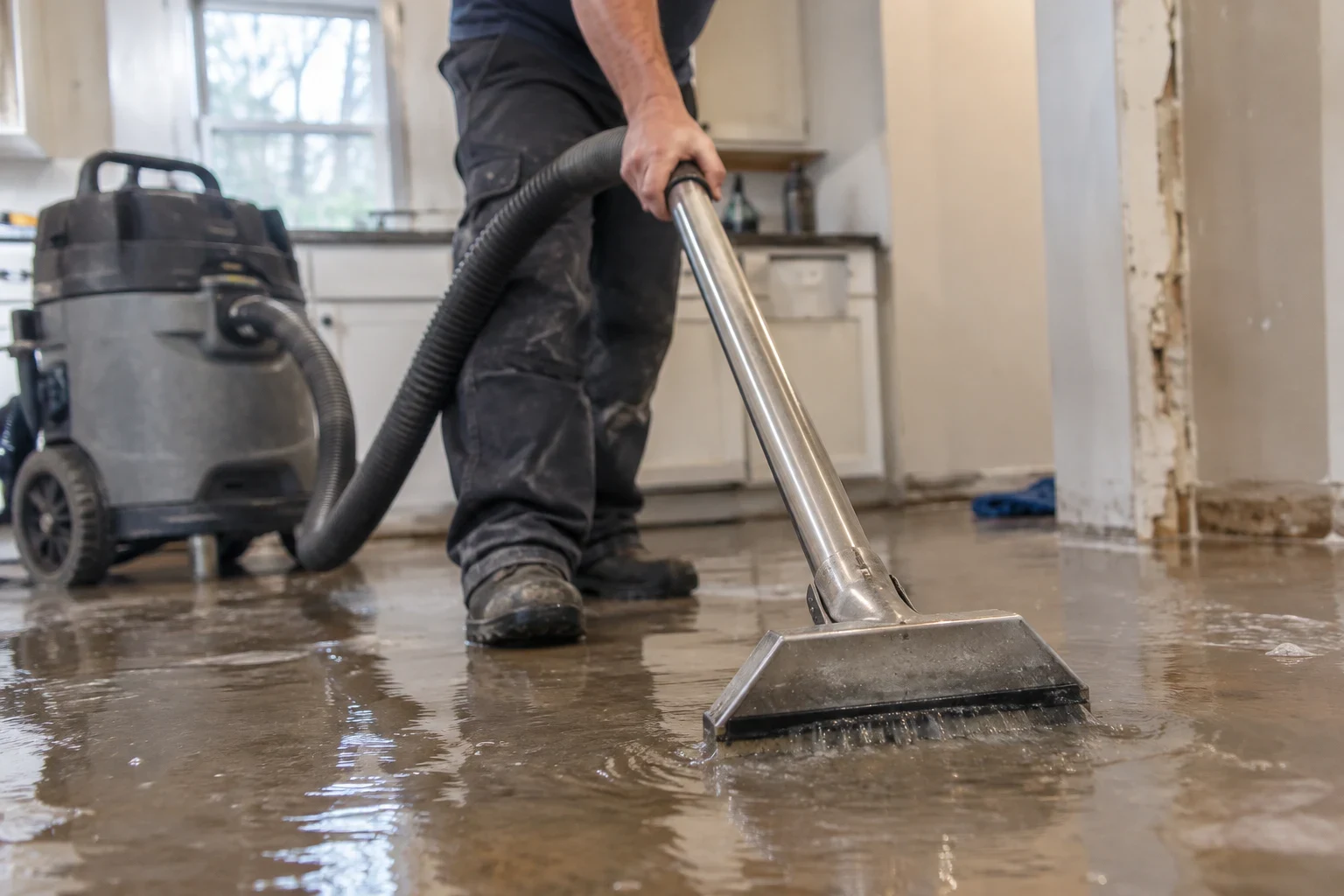
Getting the Water Out Is the First Repair
Water extraction is the step that removes liquid water from your home before drying can begin. A household wet vac lifts what sits on top. Our extractors pull water out of carpet pad, from between floorboards and out of the cavities where it pools under cabinets, which shortens drying time and gives finishes like hardwood and trim a better chance of being saved.
We also look at the parts of the job most people never see. Water near outlets and baseboard heaters is a safety and code issue, not just a mess. We shut off affected circuits, tell you plainly when an electrician needs to inspect them, and explain which later repairs will need a permit so nothing gets covered up that should have been checked.
What Our Extraction Work Includes
- Safety check before we start
- We confirm the water source is stopped, check for live circuits in wet areas and decide whether the water is clean, gray or contaminated. That category sets how we handle everything after.
- Truck-mounted and portable extraction
- High-powered units handle large volumes, while portable extractors reach upstairs rooms, closets and tight bathrooms without hoses running through your living space.
- Carpet and pad decisions
- Some carpet can be extracted in place and dried. Pad soaks up water like a sponge and is often removed. We show you which is which instead of pulling everything by default.
- Moisture mapping
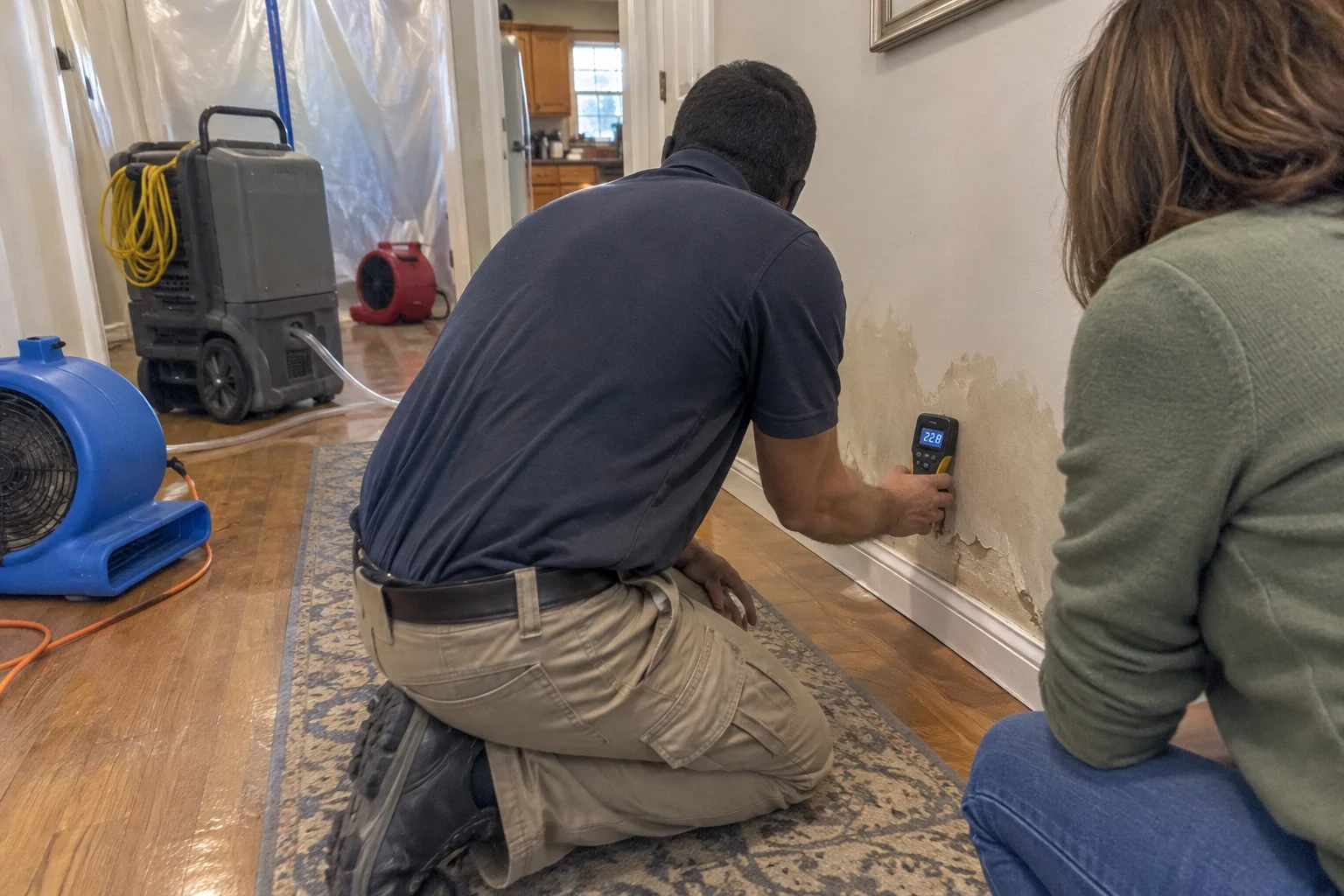
- Meters and thermal imaging tell us how far water traveled under flooring and up walls. We mark the readings and photograph them for your records.
- Contents protection
- Furniture is lifted onto blocks or moved out of the wet area, and floors along our work path are covered to keep the rest of your home clean.
Signs You Need Water Extraction Now
Carpet squishes underfoot
If pressing the carpet brings water to the surface, the pad below is saturated. That moisture will move into the subfloor and baseboards within hours.
Water under vinyl or laminate
Plank floors that lift, bubble or feel soft usually have water trapped beneath them, where a mop never reaches.
A burst line or failed water heater
Supply lines release a lot of water quickly. Even after the valve is shut, what has already escaped needs to be removed.
Wet walls near outlets
Stained drywall close to receptacles or switches is a reason to turn off the breaker and have the area checked before anyone keeps working there.
Water in a basement or crawl space
Standing water below the house raises humidity everywhere above it and can soak insulation and wiring.
What Shapes the Cost of Extraction
We don't quote extraction over the phone without seeing it, because the price depends on what is under the surface. After the free on-site inspection you get a written, line-item estimate. If the loss is covered, we work with most major insurance companies and explain how the paperwork moves, though your adjuster decides the claim.
Amount and spread of water
One bathroom is a different job from a finished basement with water under every wall. Square footage and depth both matter.
Water category
Clean water from a supply line is handled differently from gray water or anything contaminated, which needs protective gear and more material removal.
Flooring and finishes
Carpet with pad, glued-down vinyl, engineered wood and solid hardwood each extract differently, and some need more careful handling than others.
Time since the water arrived
Water that has sat for a day has moved deeper into drywall and subfloor, which means more removal and longer equipment time.
How Extraction Day Runs
- 1
Your call and our arrival
Tell us what happened and where the water is. We offer emergency water damage response around the clock, and we're on site in 60 mins or less.
- 2
Inspection and a plain explanation
We walk the space with you, take moisture readings and photos, and explain what we plan to remove, what we plan to save and why.
- 3
Extraction
We pull water from floors, carpet, pad and cavities, lifting or removing materials only where the readings call for it. Wet debris is bagged and carried out.
- 4
Setup for drying
Once standing water is gone, we place air movers and dehumidifiers as part of our drying and dehumidifying service and schedule follow-up readings.
- 5
Written summary
You get a record of the source, affected rooms, readings and photos. It notes any electrical or structural items that need inspection before repairs begin.
Water Extraction Questions
Can I just use my shop vac?
For a small spill on a hard floor, yes. Once water reaches carpet pad, under cabinets or into walls, a shop vac leaves most of it behind. That hidden moisture is what leads to warped floors and mold later.
Will my carpet have to be thrown out?
Not always. Clean water caught early can often be extracted from carpet and dried in place, while the pad is usually replaced. Carpet soaked with contaminated water is removed for health reasons.
Does water extraction need a permit?
Removing water and wet materials generally does not. Rebuilding often does, especially drywall replacement, electrical repairs and structural work. We tell you which items in your job fall under the building code and coordinate inspections through our repairs and rebuild service.
Do I need to leave my home during extraction?
Usually not for clean-water losses. The equipment is loud, and we keep unaffected rooms usable where we can. If the water is contaminated, we may suggest keeping children and pets away from the area.
Do you serve areas outside Fort Lee?
Yes. We handle water extraction in Petersburg, Hopewell, Colonial Heights, Chester and nearby communities.
Water on the Floor Right Now
Shut off the water if you safely can, stay clear of wet outlets, and give us a call. We'll come out, measure what's wet and explain the next steps before any work begins.